When it comes to choosing the right flooring for your home, the debate between vinyl vs laminate flooring is a common one. Both options offer affordability, durability, and aesthetic appeal, but understanding their differences is crucial to making an informed decision. In this comprehensive guide, we’ll delve into the key distinctions between vinyl and laminate flooring, helping you determine which is best suited for your needs.
Understanding Vinyl and Laminate Flooring
Vinyl Flooring: Vinyl flooring is a synthetic product made primarily from polyvinyl chloride (PVC). It’s known for its water resistance, making it ideal for areas prone to moisture like bathrooms and kitchens. Available in sheets, tiles, or planks, vinyl flooring can mimic the appearance of natural materials such as wood or stone.
Laminate Flooring: Laminate flooring consists of multiple layers, including a high-density fiberboard core, a photographic layer that replicates wood or stone, and a protective wear layer. While it offers a realistic look, laminate is more susceptible to water damage compared to vinyl.

Key Differences Between Vinyl and Laminate Flooring
1. Water Resistance
One of the most significant differences between vinyl and laminate flooring is their reaction to moisture.
- Vinyl Flooring: Highly water-resistant and often waterproof, making it suitable for basements, bathrooms, and kitchens.
- Laminate Flooring: While some laminate options offer water resistance, prolonged exposure to moisture can cause the material to warp or swell.
2. Durability and Longevity
Both flooring types are durable, but their longevity can vary based on usage and maintenance.
- Vinyl Flooring: With proper care, vinyl flooring can last between 10 to 20 years.
- Laminate Flooring: Typically lasts between 15 to 25 years, though it’s more prone. to damage from water and heavy wear.
3. Appearance and Aesthetics
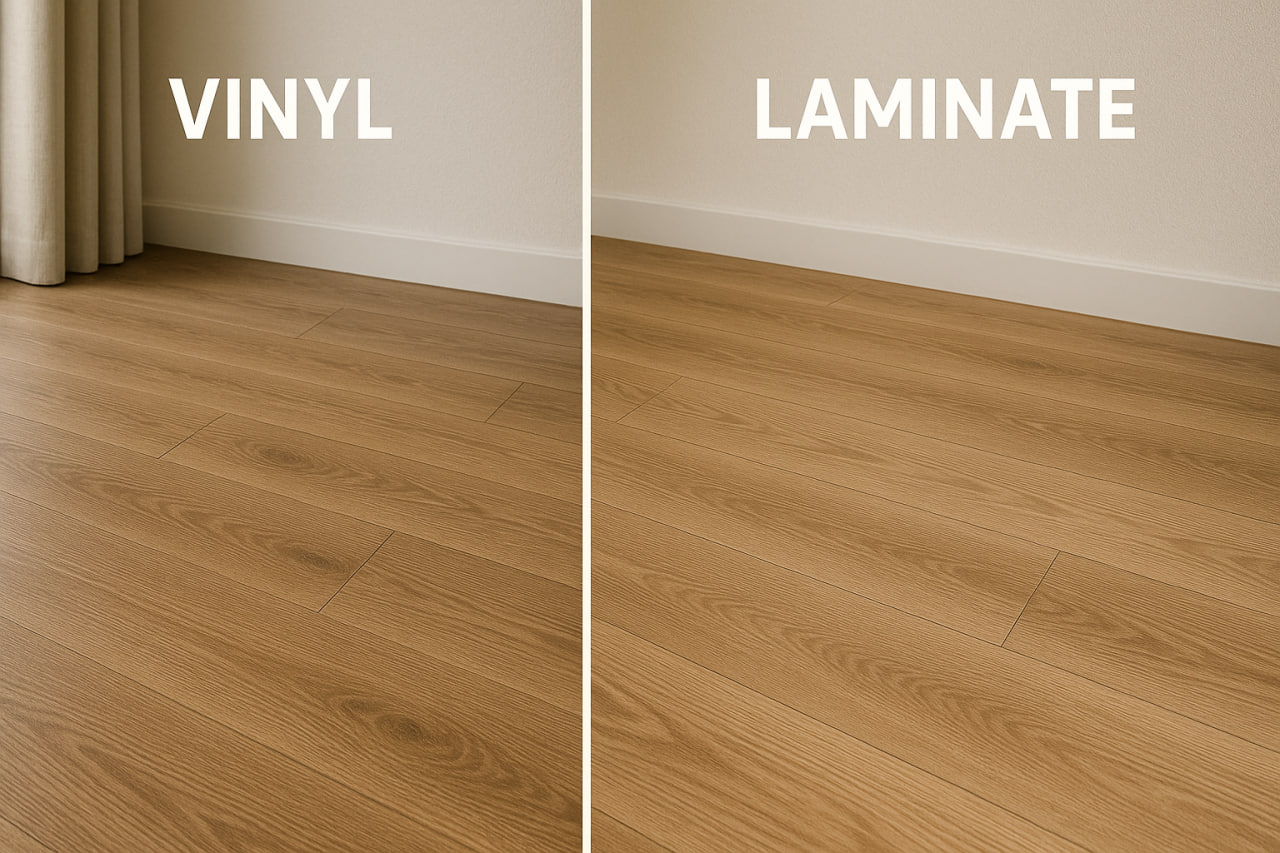
Both vinyl and laminate flooring aim to replicate natural materials, but there are differences in their visual appeal.
- Vinyl Flooring: Modern vinyl options offer realistic textures and patterns, closely mimicking wood, stone, or tile.
- Laminate Flooring: Known for its high-resolution photographic layer, laminate provides a more authentic wood appearance, often with embossed textures.
4. Installation Process
Ease of installation can influence your flooring choice, especially for DIY enthusiasts.
- Vinyl Flooring: Available in peel-and-stick, click-lock, or glue-down options, vinyl is generally easier to install and can be placed over existing floors.
- Laminate Flooring: Typically uses a click-lock system, requiring a foam underlayment. While still DIY-friendly, it may need more preparation compared to vinyl.
5. Comfort and Sound
The feel underfoot and sound absorption can differ between the two materials.
- Vinyl Flooring: Softer and quieter, especially when installed with a padded underlayer.
- Laminate Flooring: Harder underfoot and can produce a hollow sound without proper underlayment.

Cost Comparison
Budget considerations are essential when selecting flooring.
- Vinyl Flooring: Generally ranges from $2 to $7 per square foot, depending on quality and design.
- Laminate Flooring: Typically costs between $1 to $5 per square foot, making it a more budget-friendly option.
Maintenance and Care
Both flooring types are relatively low-maintenance, but their care requirements differ slightly.
- Vinyl Flooring: Easy to clean with regular sweeping and occasional mopping. Its water resistance allows for wet cleaning methods.
- Laminate Flooring: Requires dry cleaning methods like sweeping or vacuuming. Excessive moisture can damage the surface, so wet mopping is discouraged.
Environmental Impact
Sustainability is an increasing concern for homeowners.
- Vinyl Flooring: Being synthetic, it’s less eco-friendly and can emit VOCs (volatile organic compounds).
- Laminate Flooring: Often made from recycled materials and considered more environmentally friendly, though it can also emit VOCs.
Which Flooring is Right for You?
Deciding between vinyl and laminate flooring depends on your specific needs:
Choose Vinyl Flooring if:
- You need water-resistant or waterproof flooring.
- You’re installing in moisture-prone areas like bathrooms or basements.
- You prefer a softer, quieter underfoot feel.
Choose Laminate Flooring if:
- You’re looking for a cost-effective solution with a realistic wood appearance.
- You’re installing in dry areas like living rooms or bedrooms.
- You want a DIY-friendly installation process.
Also read: – Home Remodeling: Refinish and Repair Hardwood Floors
 Consulting Remodeling Contractors in San Francisco
If you’re considering a flooring upgrade in the Bay Area, consulting with experienced remodeling contractors in San Francisco can provide valuable insights. Professionals can assess your space, recommend suitable materials, and ensure proper installation, enhancing the longevity and appearance of your floors.
Conclusion
Understanding the difference between vinyl and laminate flooring is essential for making an informed decision that aligns with your home’s needs and your personal preferences. Whether you prioritize water resistance, aesthetic appeal, or budget, both flooring options offer unique advantages. By considering the factors outlined above and consulting with remodeling contractors in San Francisco, you can select the perfect flooring solution for your home.